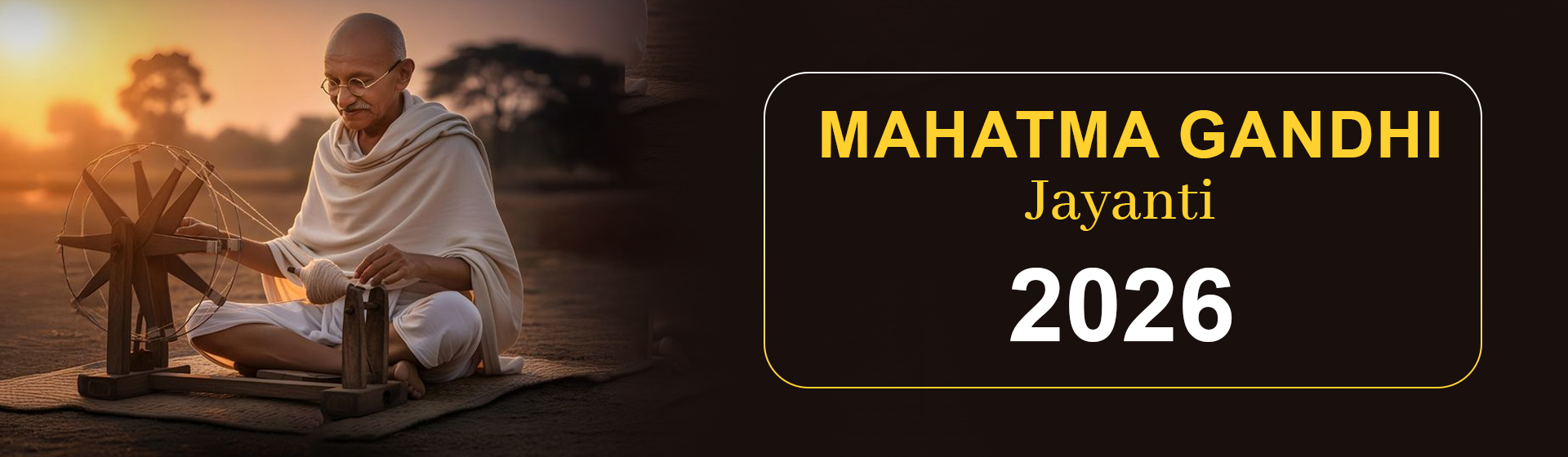
Gandhi Jayanti is one of the most important national occasions observed in India. It is celebrated every year on 2 October to mark the birth anniversary of Mahatma Gandhi, one of the most recognised leaders of India’s freedom movement. Mahatma Gandhi is remembered for his principles of truth, non-violence, peace, simplicity and service. His approach to social and political change influenced millions of people during India’s struggle for independence and continues to be discussed around the world. Gandhi Jayanti 2026 will be observed on Friday, 2 October 2026. The day gives people an opportunity to remember Gandhi’s contribution, learn about his life and reflect on the values associated with his teachings.
When Is Gandhi Jayanti 2026?
Gandhi Jayanti 2026 will be observed on 2 October 2026, a Friday. People observe it every year because it marks Mahatma Gandhi’s birth anniversary. Gandhi Jayanti is recognised as a national holiday in India. On this day, people may participate in prayer meetings, educational programmes, cultural events, cleanliness activities and commemorative ceremonies. Schools and organisations often use the occasion to teach students and communities about Gandhi’s life and principles. The day is also significant beyond India. 2 October is observed by the United Nations as the International Day of Non-Violence, reflecting the international recognition of Gandhi’s association with non-violent action.
Why Is Gandhi Jayanti Important to India?
Remembering Mahatma Gandhi
Gandhi played an important role in India’s struggle for independence. His methods of peaceful resistance and mass participation became an important part of the freedom movement. Gandhi Jayanti gives people an opportunity to learn about his journey, his ideas and the historical events in which he participated. Schools and educational institutions often organise special programmes to help students understand his contribution. Remembering Gandhi does not only mean looking at his role in history. It can also encourage people to think about values such as truth, discipline, peace and service.
Promoting Non-Violence
One of the most recognised ideas associated with Mahatma Gandhi is Ahimsa, or non-violence. Gandhi believed that resistance and social change could be pursued through peaceful methods. His approach encouraged people to express disagreement without using violence. This principle became an important part of several movements during India’s freedom struggle. Gandhi Jayanti provides an opportunity to discuss the importance of peaceful communication and respectful ways of dealing with disagreements. These ideas can be relevant in families, workplaces, schools and communities.
Remembering the Importance of Truth
Truth was a central part of Gandhi’s philosophy. He believed that honesty and truthfulness should guide both personal conduct and public action. His life is often discussed in connection with the idea of staying committed to truth even when doing so may be difficult. On Gandhi Jayanti, people can reflect on how simple acts of honesty can build trust in everyday relationships. Being truthful with family members, colleagues, and friends can contribute to stronger and more respectful relationships.
Encouraging Peace and Harmony
Gandhi believed in peaceful coexistence and respect among people. He spoke about social harmony and encouraged people to work towards peaceful relationships within society. India is home to people with different languages, cultures, traditions and backgrounds. Gandhi’s message of harmony provides an opportunity to reflect on the importance of respecting these differences. Gandhi Jayanti can therefore serve as a reminder to communicate respectfully, listen to others and look for peaceful ways to resolve disagreements.
Inspiring Simple and Responsible Living
Mahatma Gandhi was known for his simple lifestyle. He believed that people should focus on meaningful living rather than unnecessary material consumption. His lifestyle is often remembered for its simplicity, discipline and focus on self-reliance. Gandhi Jayanti allows us to think about our own habits and choices. Simple and responsible living can include avoiding unnecessary waste, using resources carefully and being mindful of our impact on others and the environment.
Why and Where We Use Mahatma Gandhi Photos?
Gandhi Jayanti Photos in Schools and Colleges
Schools and colleges often use Gandhi Jayanti photos during celebrations, presentations, notice boards and classroom activities. Students may learn about Gandhi’s life through photographs, timelines and historical events. Visual material can make history easier to understand, especially for younger students.
Gandhi Photos for Tributes and Events
Government offices, organisations and community groups may use Mahatma Gandhi’s photographs during commemorative programmes and tribute events. His portraits can be displayed alongside flowers, messages and information about his life. Such displays help create a respectful setting for remembering his contribution.
Gandhi Jayanti Photos on Social Media
Social media has also become a common way to share Gandhi Jayanti photos and messages. People may share historical photographs of Gandhi along with messages about truth, peace and non-violence. Organisations may also create Gandhi Jayanti graphics for awareness campaigns and educational content. When sharing historical photographs online, it is useful to choose authentic, respectful and appropriately sourced images.
How Is Gandhi Jayanti Celebrated in India?
Prayer Meetings and Tributes
Prayer meetings and tribute ceremonies are commonly organised to remember Mahatma Gandhi. People may gather at memorials and other locations associated with him. Such programmes provide a quiet setting to remember his life and reflect on his principles.
School and College Programmes
Educational institutions often organise special activities for students on Gandhi Jayanti. These may include:
- Essay writing competitions
- Speech competitions
- Drawing and poster competitions
- Quiz programmes
- Cultural activities
- Educational presentations
- Gandhi-themed discussions
These activities help students learn about Gandhi’s life and India’s freedom movement in an engaging way.
Community Activities
Community groups and organisations may organise activities focused on cleanliness, social awareness and service. These programmes can encourage people to work together and contribute to their local communities.
Cleanliness and Awareness Activities
Cleanliness activities are often associated with Gandhi’s legacy. Schools, organisations and communities may organise cleanliness drives and awareness programmes around Gandhi Jayanti. These activities can encourage people to take responsibility for maintaining clean homes, workplaces, neighbourhoods and public spaces.
Conclusion
Gandhi Jayanti 2026 is an occasion to remember Mahatma Gandhi, his contribution to India’s freedom movement and the values associated with his life. Observed on 2 October, the day is marked through educational programmes, tributes, community activities, and Gandhi Jayanti photos and messages shared across the country. More than simply remembering a historical figure, Gandhi Jayanti allows us to reflect on values such as truth, non-violence, peace, simplicity and harmony. As we remember Mahatma Gandhi on 2 October, these values can serve as points of reflection in our everyday lives.
Happy Gandhi Jayanti!
Transforming the lives of millions of families within 9 to 180 days with his divine knowledge.